Drafting While Kids Are on Break

Drafting while your kids are on Christmas break is not easy.

I try to sneak away for a bit here and there, but let’s be honest, the holidays are about family and so writing time has to be compromised.

For me, when I need a few hours to get down some words, I tell the kids to not bother me unless someone is bleeding or choking (mine are old enough to do this) and I make sure it’s after a meal time. THEN… are you ready for some real talk?

I lock the door to my room and put my music on really loud.

So far, no one has died or suffocated or choked as a result of me writing for a few hours.

I call that a win.

giphy

Merry Christmas everyone!!

Fun with Rejection

Is there really anything fun about rejection? ummm, nope. But if you’re a writer pursuing publication, rejection is going to get as familiar as a dog is with its own butt.

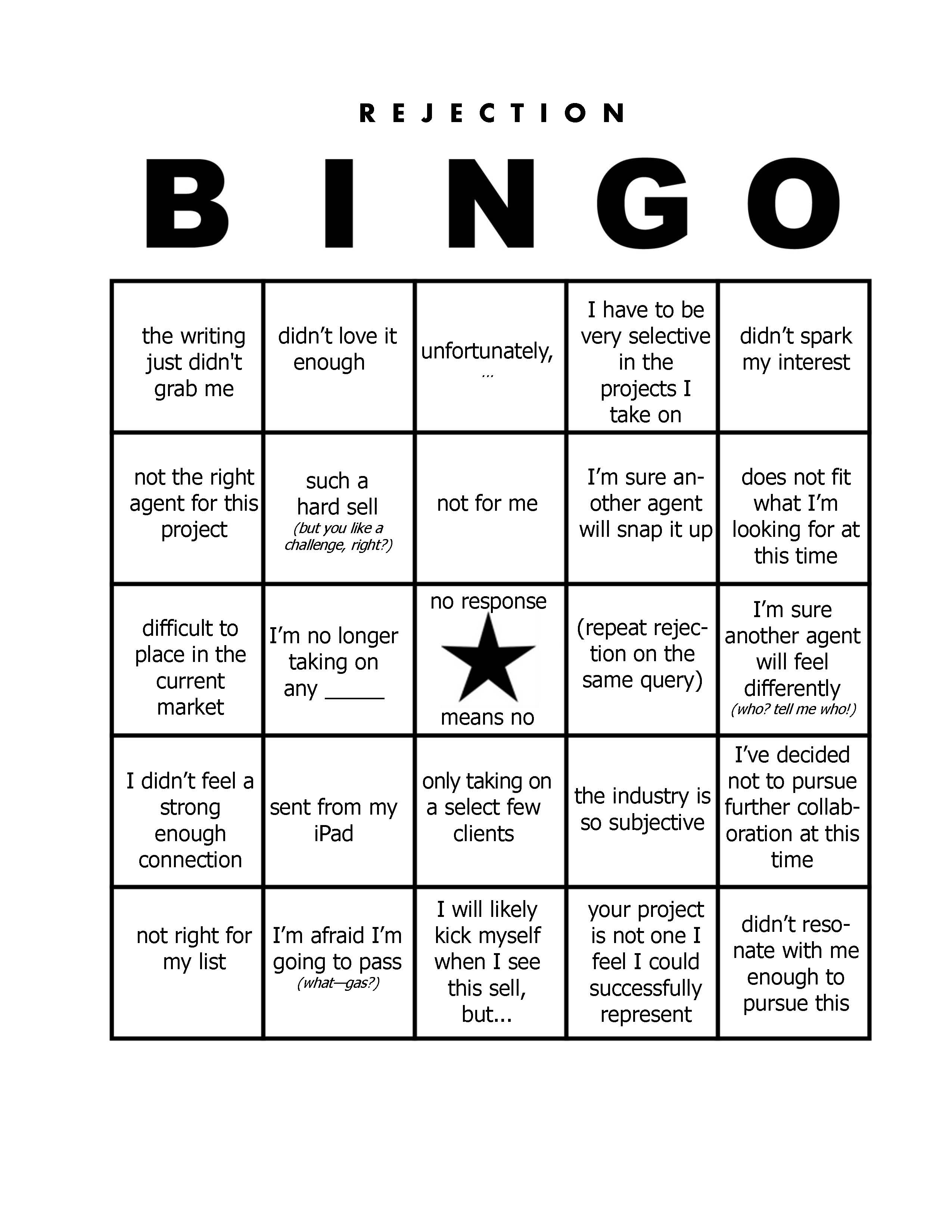
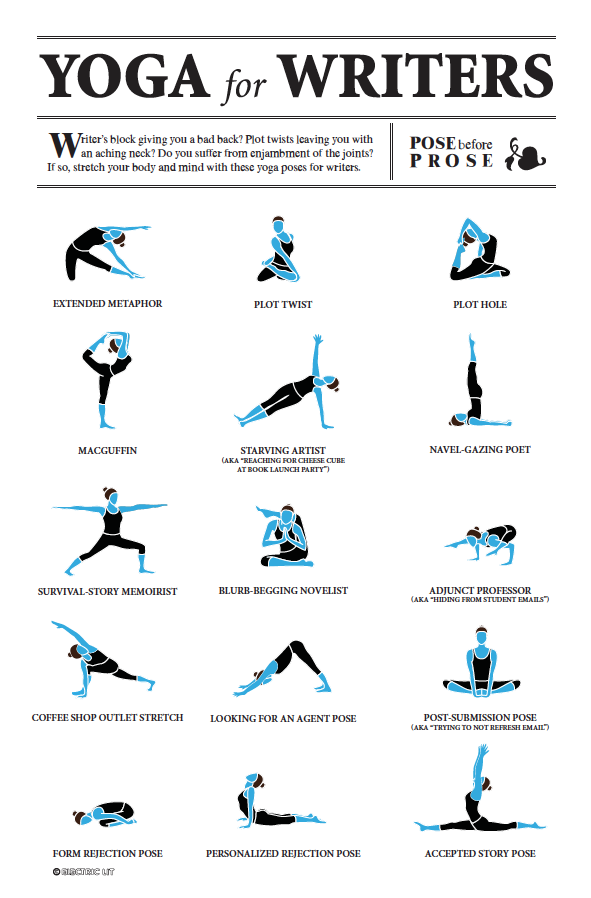
However, here are a few fun things that can help take the sting out of your rejection letters… maybe, REJECTION BINGO?rejection bingo - revOr maybe you’re more active, and YOGA FOR WRITERS is more your style? I’m well acquainted with many of these poses… or mentally because let’s be real. Carpal Tunnel and Yoga do not mix.


CPEwjNaW8AAUylT.png-largeEither way, learn your coping mechanisms because rejection doesn’t stop after you get out of the query trenches. It’s a way of life for us writers because subjectivity is a bitch.

Dear #Pitchwars 2015 Mentees

Hey you… yup, I’m talking to you.

giphy-2

I know, weird that  you’re now a mentee (which btw is a weird word and always autocorrects to menthe when you’re typing. So annoying). If you were anything like me last year, I was specifically choosing NOT to look on Brenda’s blog because I didn’t want yet another disappointment.

Then my Twitter feed started blowing up and just like that, I found out I was chosen by the amazing Trisha Leigh!

My writing life has never been the same.

In an effort to pay it forward, here are three things I would like to pass on to you as an alumni (that sounds WAY fancier than it really is).

I ended up signing with an agent who requested from #PitchWars, but SO many of my amazing fellow PitchWarriors signed with agents who didn’t request from #PitchWars. So I guess that’s the first thing you need to know. Don’t let yourself be consumed with getting requests. The amazing thing about this contest is that it focuses on craft rather than reward… The entire point of #PitchWars is actually not to get you an agent. The entire point of #PitchWars is to give your manuscript the best shot it has in order to eventually get an agent. If you have a kick butt manuscript, then by default, you have a WAY better chance of finding an agent with it! FOCUS ON THE CRAFT, NOT THE REWARD.

Second thing… LEAN IN.

This process can be tough. If this is the first time you’ve ever revised with an edit letter, it can be REALLY overwhelming (I wrote about how I tackled it here). But the revising process doesn’t stop with your mentor. You may be asked to revise and resubmit by an agent or you may choose to revise based on similar reasons for rejections… then once you get an agent, you may go through several rounds of revision (*raises hand in solidarity*), and then when your book sells you’re going to have to revise some more! Lean in to all of it. Throw yourself into it (I always think of this scene from Wild Hearts Can’t Be Broken when I say that).

enhanced-buzz-29891-1366238983-11

Fear of failure is going to try to weave it’s shriveled, gnarled fingers into your confidence. Drop kick that fear in the face and — Like my grandma always says — fake it till you make it. Because here’s a secret, NONE of us ever feel like we know what we’re doing. Every book scares us just as much as the last one.

Lastly… say no to competitiveness.

When a big chunk of the 2014 PitchWarriors got a private FB group, something magical happened. We all left our egos at the door and purposefully chose not to be competitive with each other. This meant that we shared stats, we shared when we got rejected and by who (so that others with materials out with that agent could know where they were on the reading list). We shared the dates of requests so we could let others know where the agents were at in the query inbox. None of us played things close to the chest because we were ALL getting rejections and victories and we ALL needed to celebrate or cry with THE ONLY OTHER PEOPLE WHO ACTUALLY UNDERSTAND! We shared it all. We asked for query critiques, first pages critiques, even full manuscript reads when we made changes. We helped eachother with email wording, we bounced twitter pitches off each other, we talked each other off the ledge when we felt like we were NEVER going to get an agent or no one would EVER fall in love with our manuscripts. Then we would scream and squeal when we started getting agents and book deals. oh and laughed. We laugh a lot. It’s been almost a year, and none of us have any intention of ever leaving 🙂

None of that could have happened if we went into it thinking that the other mentees were competition. They aren’t. Even if they write in the same genre, they aren’t competition. Quite the opposite actually, they’ll be your lifeline to the reason you started writing in the first place if you’ll let them.

So welcome to the #PitchWars club! You’re going to have a blast!

Oh and one last thing, remember that finding an agent is just like making base camp on your climb up Everest. You need to make it to base camp, but you can’t stay at base camp. Celebrate when you get there, but keep your eye on the prize (aka total world domination… er I mean a lifetime of published books!)

Bonne Chance et Bisous!

giphy

(Oh and on the day of the agent round, just take the day off work if you can because let’s be real… you’ll be checking your entry ALL DAY! #refresh #refresh #refresh)

For the other AMAZING PW2014 thoughts for the PW2015’ers, visit: 

Amanda Rawson Hill: On Doubt and Hope

Tracie L. Martin: What no one tells the PitchWarriors

Jennifer Hawkins: Last year at this time, I was you…

K. Kazul Wolf: Congrats on getting further into the insanity…

A.B. Sevan: Swimming with the Big Fishies

Tracie Martin: What No One Tells the PitchWarrior

RuthAnne Snow: 2014 Pitch Wars Mentee here, looking to offer…

Rosalyn Collings Eves: Most of you are probably sick with dread…

Peggy J. Sheridan: Welcome to the club…

Janet Walden-West: The Long Game

Destiny Cole: Yup, I’m talking to you…

Kelly DeVos: Confessions of a PitchWars Alternate

Mary Ann Marlowe: First things first…

Mara Rae: I’m going to keep it short and sweet…

Jen Vincent: Last year, on a complete whim…

Kip Wilson: Congratulations, lucky mentees…

A. Alys Vera: PitchWars is great, don’t get me wrong…

Nikki Roberti: 3 Things You Need to Know

Erin Foster Hartley: I’ve been putting this off…

How to Revise with an Edit Letter: Part 2

If you’re following along, you’re going to want to make sure to do Part One of the revision process before you tackle this section. So after a week full of snow days and cabin fevered kids and husband (who was undoubtedly worse than the kids), Gv7vqZs it took me longer to get to phase two of my revision plan than I expected. But alas, I finished the next step. This is called the notecard phase. This is when you go through all the notes you made on your character/plot/setting pieces of paper and turn each one of those into a notecard with a corresponding chapter. Then I went through my edit letter from my agent and made individual notecards for her notes too. In the end, my table at Barnes & Noble looked like this and I had over a 100 cards: IMG_4233 80% of my notecards were plot related, but then I did have some that were character related as well, which brought on some character worksheets that I didn’t originally think I was going to do. I ended up creating in-depth bios with 3 minor characters that probably won’t make it into the story, but will absolutely affect the way I write them. I needed a better handle on their motivations and this is the best way to do that. I did it freehand and just sketched out their lives. It doesn’t have to be pretty, because it’s not going in the book. It’s just for you to get to know your character more. In doing this, one of my characters is changing a lot, which I like! Your notecards will be detailed and you’ll have several for each chapter, so just put them in chronological order. Or sometimes your notecard will just be you telling yourself this section sucks and you can do better: IMG_4232 Then I got all my notecards and organized them and put them in a nifty little box because I’m awesome like that and get a weird pleasure out of seeing things in order. This urge for order is unfortunately compartmentalized just to the professional side of my life and does not lend itself to house cleaning, but wouldn’t it be awesome if it did? I would basically be a super hero. IMG_4234 So that concludes the getting organized section of the revision process! Now on for Phase Three… the fun part when you get to actually start revising on the page! 🙂

How to Revise with an Edit Letter: Part One

My fabulous agent Kirsten did not miss a beat and just days after signing me, she spit out a pretty epic edit letter.

I’m not going to lie, when I read it I had a mixture of feeling like this:

tumblr_mz98x2mhUl1r187pho1_500

and then this:

tumblr_inline_ml1s70CYEA1qz4rgp

She had some very specific things she’d like to see addressed and although they aren’t huge, they are the kind of changes that have ripple effects. In other words, the first half of the book is going to get a pretty serious overhaul.

So how do you even begin to tackle a revision based on an edit letter?

Here is what I decided to do, part one.

First off, don’t do anything for a day or two. Keep reading the edit letter and start revising in your mind. I’m serious about this one. Just stew on it for a day or two.

For practical purposes, I pulled my revision plan together from three sources: the venerable Susan Dennard who’s writing advice is beyond amazing, Beth Revis who’s writing guide Paper Hearts is a must read for all writers and then one of my CPs Alexa Donne who has some pretty kick butt blog posts on revising.

The first thing I did was print out my entire MS and put it in a binder (though it’s also fun to get it bound!) I was trying to save on paper/printing costs, so I shrunk it down to 10pt font and put it in single space. That helped cut down the pages printed by over half. I could do that because I wasn’t actually looking to revise on the page, but just read.  I’m sure you could do this just by reading on your computer or maybe transferring it to your Kindle, but I wanted the option of scribbling on the page and I also revise a lot by hand. (Note: you’ll also need to revise your novel in 10pt/single space at the beginning because you’ll want your notes to match up, so keep that in mind.)

Screen Shot 2015-02-24 at 2.16.45 PM

I then read my edit letter probably 10-15 times. I wanted to get her suggestions down deep so that as I was reading through, I would know what to look for without having to reference the letter. The same goes for the plot/setting things she pointed out as well.

Then I had a separate blank sheet of paper for every main character (and plot relevant minor character) as well as a page for plot problems and setting problems.

As I read through my entire MS, I was looking for areas where I could deepen a character POV, flesh out a reaction, make the characters fuller. Instead of marking the manuscript, I would just mark it on the corresponding sheet. With plot/setting, I was looking at where I needed to implement my agent’s suggestions and would mark it down on the sheet. I also would mark paragraphs/dialogue in the MS that I didn’t like with “re-work.”

For example, on my plot page, I would write: “On page 47, get rid of “Roger” character and replace with Liam to tie in better with the Initiative.” For a character, I would write down, “Soften the Senator’s reaction on page 6, give him a moment where he is kinder to Willow in this scene.”

Note that I didn’t actually do any revising yet, I just plotted out on a broad scale where I would revise things.

So that is part one!

I’m writing this blog series as I go, so I’ll know what worked and what didn’t.

Up next on my plan? NOTECARDS 🙂